

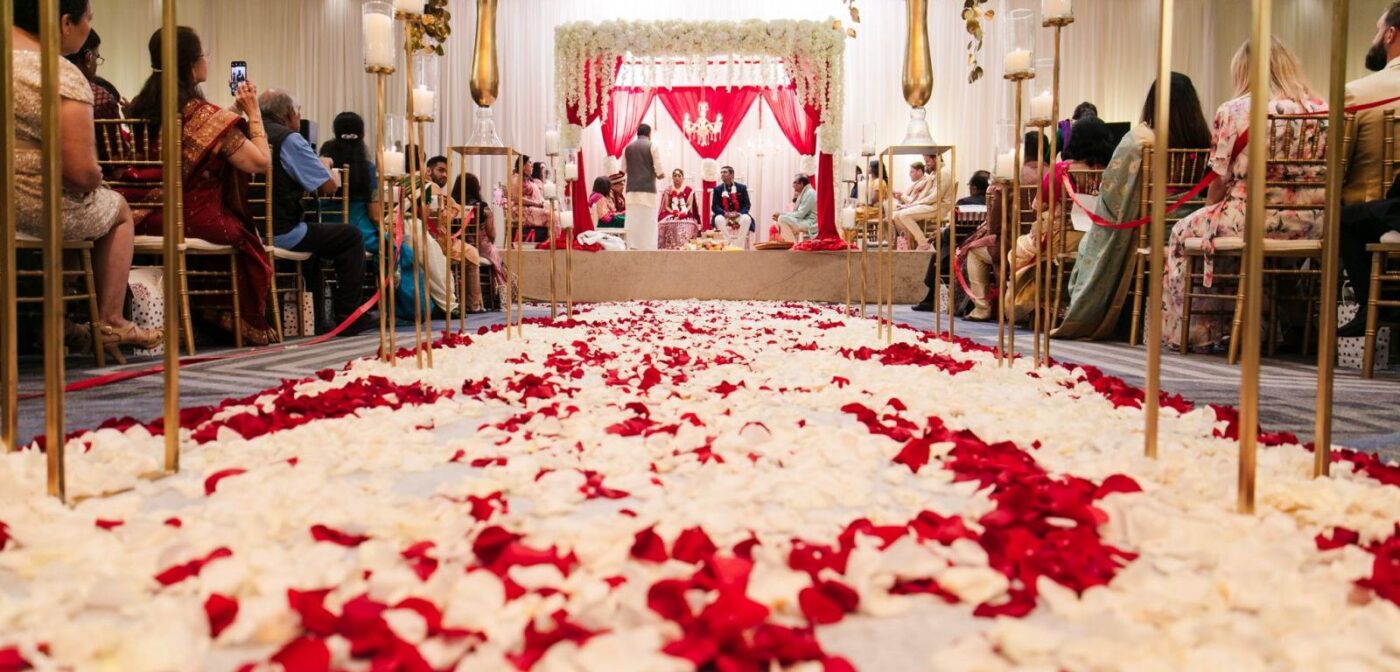
Planning a South Asian wedding in Dallas means juggling multiple ceremonies, dozens of vendors, and family expectations that span continents — all while trying to keep the whole thing feeling personal instead of like a logistics spreadsheet. Between the mehndi, sangeet, baraat, and reception, a typical Desi wedding in the DFW area runs three to five events over several days, and each one needs its own timeline, vendor, and vibe. This guide walks through how to plan a South Asian wedding in Dallas step by step, with a realistic timeline and the vendor categories that matter most.
Why South Asian Wedding Planning in Dallas Looks Different
Dallas–Fort Worth has one of the fastest-growing South Asian communities in the country, concentrated in Irving, Plano, Frisco, Coppell, and Allen. That density is a huge advantage for couples: it means there are venues, caterers, and vendors in the metroplex who already understand what a baraat needs in terms of space and timing, what a mandap setup requires structurally, and how to schedule a sangeet that doesn’t run past midnight on a weeknight. Working with vendors who have direct experience with Indian, Pakistani, Bangladeshi, or Sri Lankan weddings saves enormous back-and-forth compared to explaining traditions from scratch.
The Multi-Event Reality
Most South Asian weddings in the Dallas area include some combination of:
- Mehndi night — henna, music, and usually a more relaxed dress code
- Sangeet — choreographed dances, family performances, and a full DJ set
- Baraat — the groom’s processional entrance, often with a dhol player
- Ceremony — Hindu, Sikh, Muslim, or Christian rites depending on the couple’s background
- Reception — the biggest production, with grand entrances, speeches, and dancing late into the night
Each event has a different guest list, different vendor needs, and a different pace — which is exactly why planning has to start early.
A Realistic South Asian Wedding Planning Timeline for Dallas
12 Months Out: Lock the Venue and Date
Popular DFW venues that regularly host South Asian weddings — ballrooms in Irving and Frisco, larger hotel properties near DFW Airport, and dedicated banquet halls in Plano — book out fast, especially for wedding season (October through March, when Texas heat isn’t a factor). If your family wants a specific date for astrological reasons, this is the moment to secure it. This is also when you should book your caterer, since South Asian catering companies serving Dallas often only take a limited number of events per weekend.
9–10 Months Out: Book the Entertainment and Photography
DJs, dhol players, and photo/video teams experienced with multi-day Desi weddings get reserved early, particularly for peak months. If you want live dhol for the baraat and a DJ who can transition cleanly between Bollywood, Punjabi, bhangra, and Western top-40 for a mixed guest list, book this vendor before you lock in décor.
6 Months Out: Décor, Mandap, and Outfits
This is when mandap design, floral décor, and stage setups get finalized with your decorator. It’s also the window to order bridal and groom outfits from India or Pakistan, since shipping and alterations can take months.
3 Months Out: Choreography and Guest Logistics
Sangeet dance rehearsals should be well underway. This is also the time to finalize hotel room blocks for out-of-town family — a real consideration in Dallas, where many South Asian families are flying in from both coasts and overseas.
1 Month Out: Confirm Every Vendor Timeline
Send a detailed run-of-show to every vendor — caterer, DJ, dhol player, decorator, photographer, and venue coordinator — so the baraat, ceremony, and reception transitions happen on schedule without anyone waiting around.
Vendors That Make or Break a South Asian Wedding in DFW
Beyond venue and catering, a few vendor categories deserve extra attention:
- DJ and MC — needs a deep library across Bollywood, Punjabi, Gujarati, Tamil, and Western music, plus the ability to read the room across multiple generations
- Dhol player — essential for a proper baraat entrance; coordinate arrival time closely with the venue’s parking and entrance logistics
- Mehndi artist — book early for wedding season weekends, when the best artists in Plano and Irving are fully booked months out
- Decorator/mandap designer — ask to see setups from real DFW venues, not just portfolio renders
- Priest or officiant — confirm which rituals they perform and how long the ceremony runs, since this affects your entire day’s schedule
Budgeting for a Multi-Day Wedding
Because South Asian weddings in Dallas often span multiple events rather than a single day, budgets get spent differently than a typical Western wedding. Entertainment, catering, and décor tend to scale across each function, so it’s worth asking every vendor for package pricing across the mehndi, sangeet, and reception rather than booking each event separately.
Planning a South Asian Wedding in Dallas Starts With the Right Team
The single biggest factor in a smooth South Asian wedding — whether it’s an Indian, Pakistani, Bangladeshi, or Sri Lankan celebration — is hiring vendors in the Dallas–Fort Worth area who already speak the language of baraats, sangeets, and mandaps. It cuts down on miscommunication and lets your family focus on the celebration instead of managing logistics.
DJ Jazz Entertainment has been part of South Asian weddings across Dallas, Plano, Frisco, Irving, and the wider DFW metroplex for years, handling everything from baraat dhol coordination to sangeet choreography music to reception MC duties. If you’re building out your wedding planning timeline and need a DJ and entertainment team who already understands the flow of a multi-day Desi wedding, get in touch with our team to talk through your dates and events.
