

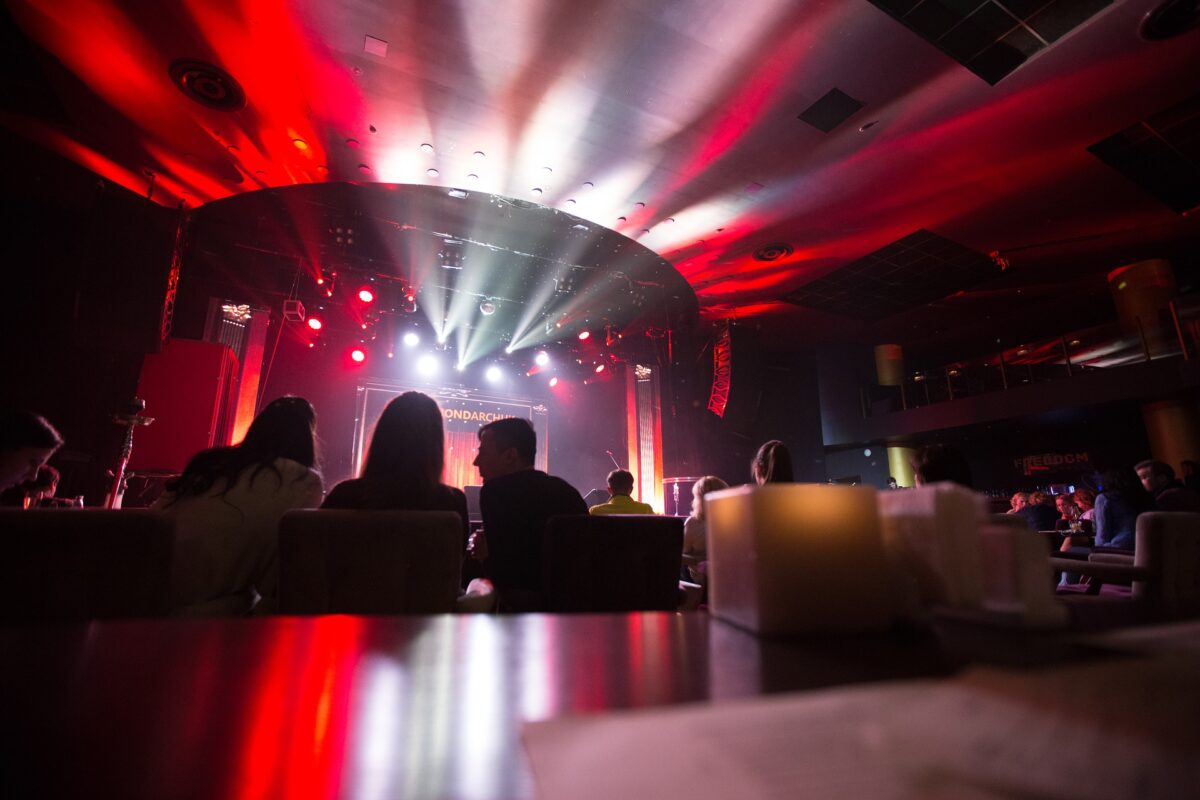
A Bollywood night DJ in Dallas is working a different job from a wedding DJ, even when the playlist looks similar on paper. At a wedding the family is the client, the program sets the pace, and the guests are there because they were invited. At a ticketed desi night — a Bollywood party at a club, a Punjabi night at a lounge, a community fundraiser dance in a banquet hall — the buyer is a promoter or a venue, there is no program at all, and every person on the floor paid to be there and can leave the moment the music stops working for them.
This guide is for promoters, venue managers and community organisers planning a Bollywood or desi night anywhere in Dallas–Fort Worth, from Uptown and Deep Ellum to the banquet halls of Irving, Plano, Frisco and Richardson. It covers how the night differs from a family event, who owns which decision, how a four-hour set is actually built, and what to agree in writing before the doors open. If you are planning a family function rather than a ticketed night, our guides to association annual functions and community Diwali parties are the better read.
How a Ticketed Desi Night Differs From a Wedding
Most of what makes a wedding reception hard disappears at a Bollywood night, and it is replaced by a different set of problems.
- There is no program. No grand entrance, no speeches, no cake cutting. The music is the product, start to finish, so there is nowhere to hide a weak stretch.
- There are no elders setting the tone. At a wedding the uncles and aunties decide how early the floor opens. At a ticketed night the room is mostly adults who came specifically to dance, which raises the ceiling and shortens everyone’s patience.
- The crowd arrives in waves. Wedding guests are seated before the reception starts. A club crowd trickles in for the first hour or two, and the people who arrive late are often a different crowd from the people who arrived at doors.
- The peak is late. A reception floor often peaks right after dinner. A desi night usually peaks well into the second half of the evening, and a DJ who plays the biggest anthems at the start has nothing left when the room is actually full.
- Nobody is obligated to stay. A wedding guest stays for the family. A paying guest walks to the bar, then to the door. The dance floor is the whole review of the night.
Who Owns What: Promoter, Venue and DJ
Most problems at a Bollywood night in Dallas come from a decision that everyone assumed somebody else was making. Write the split down before the night.
The promoter owns
Ticketing and the guest list, marketing and the theme, the door policy, the set times, any hosts, performers or giveaways, and the headcount. The promoter also owns the answer to the question the DJ most needs: who did you sell this night to? A crowd built from a Punjabi student network plays differently from one built from a Telugu professionals group or a mixed group of friends from work.
The venue owns
The house sound system (and any limiter on it), power, load-in and parking, security, the bar, the age policy, the noise limits and the hard end time. None of those should be guessed at — confirm each one directly with the venue, in writing, rather than trusting any vendor’s summary, including ours.
The DJ owns
The music, the order within each set, reading the floor, and the microphone if there is no separate host. The DJ should also own one thing that often falls through the cracks: telling the promoter early in the night if the room is not building, while there is still time to do something about it.
Building the Set Arc Across a Four-Hour Night
A good desi night DJ plans the shape of the evening before choosing a single song. A common four-hour arc looks like this.
Hour one: doors and warm-up
The room is filling and people are at the bar. Play music that is recognisable and warm but not yet peak-energy — retro Bollywood, lounge and remix versions, mid-tempo Punjabi. The goal is a room that feels alive, not an empty floor being shouted at. Peaking to twenty people burns songs you will want later.
Hour two: the build
The first dancers show up here. Move toward familiar Bollywood hits and upbeat Punjabi tracks, and watch who responds. This is the hour to find out whether this crowd leans Hindi, Punjabi, South Indian or mixed, which is exactly the floor-reading skill we cover in Bhangra, Bollywood, or Fusion?
Hour three: the peak
The room is full. This is where the big Bollywood anthems, current Punjabi pop, bhangra and well-built mashups belong. If the promoter has booked a live dhol feature, it lands best here as a short, planned moment rather than a continuous element — our dhol guide covers that decision in detail.
Hour four: sustain, then land
Keep the energy up, but decide in advance how the night ends. Some promoters want a big singalong closer; others want a gradual landing so the room empties calmly. Either way, the last track has to be timed to the venue’s actual music end time and last call — not to the end time printed on the flyer.
Playing to a Crowd That Arrives in Waves
The late crowd at a Dallas desi night has missed everything the early crowd heard. That creates two temptations, and both are mistakes: replaying the early hits for the newcomers, or ignoring the newcomers because the early crowd is already warm. The better approach is to hold a reserve of big tracks back for the peak, and to reset the energy deliberately when a new wave walks in rather than letting it dip.
A quiet floor thirty minutes after doors is not a failed night. A quiet floor at the time the room is full is. Agree with the promoter when the doors realistically fill, and plan the peak around that rather than around the start time.
Any microphone moment — a sponsor shout-out, a giveaway, a performer introduction — should be scheduled before the peak, not during it. Stopping a full floor for an announcement is the fastest way to send people to the bar.
Handling Requests From a Paying Crowd
People who bought a ticket feel entitled to a request, and at a desi night they will often ask for something specific to their region or their friend group. That is not a problem if the policy is agreed ahead of time.
- Decide whether requests are taken at all, and how — at the booth, through a host, or not at all.
- Say yes to the song, not to the timing. A good request can fit in twenty minutes; played immediately, it can empty the floor.
- Keep the booth from becoming a queue. A host or a staff member at the front can absorb most of the traffic.
- Agree an explicit-lyrics policy with the promoter and the venue. What is fine in a late-night club can be wrong for a community-hall dance with families present.
- Watch for regional splits. Several requests for Telugu or Tamil tracks in a Hindi-heavy set is information, not noise — DFW’s desi crowd is genuinely multi-regional.
Desi nights in Dallas also regularly draw friends who did not grow up with the music. The approach in our multicultural wedding guide applies here too: bridge by tempo rather than by genre, and do not water the set down for the half of the room that did not come for it.
Club Night vs Community-Hall Desi Night
The same Bollywood night runs very differently depending on the room.
- At a club or lounge, there is usually a house system, a later peak, a bar that shapes the flow of the night, and whatever age and door policy the venue sets. The main technical question is whether the DJ plugs into the house system or brings their own, what inputs it takes, and whether a limiter will cap the volume.
- At a community hall or banquet room, there may be families and a wider age range, an earlier end time, no bar, and walls shared with other rooms. Trimming low end matters more than overall volume, because bass is what travels — the same point we make in the community Diwali guide.
A Navratri garba night is a different event again, with its own structure — see our garba and dandiya guide if that is what you are planning.
What to Agree Before the Night
Put these on one page and share it with the promoter, the venue and the DJ at least a week out:
- Doors time, set times and the real music end time, confirmed with the venue
- Whose sound system is used, what it connects to, and whether a limiter applies
- Load-in time, loading access and parking
- Every microphone moment, in order, with who is speaking
- The request policy and the explicit-lyrics policy
- Who the night was marketed to, and the expected regional mix
- Any live dhol or performer features, and exactly when they happen
- One named night-of contact who can make decisions
- What happens if the venue asks for the volume down or an early stop — and who decides
For the contract side — whose name is on the booking, backup equipment and cancellation terms — the questions in What to Ask a Dallas Wedding DJ Before You Sign apply just as well to a promoter hiring for a ticketed night.
Booking a Bollywood Night DJ in Dallas
A great Bollywood night DJ in Dallas is not the one with the longest playlist; it is the one who plans the arc around when the room actually fills, holds the peak back until it is earned, and knows exactly who owns each decision before the doors open. Get the split between promoter, venue and DJ in writing, and the night can be about the music.
DJ Jazz Entertainment has served Dallas–Fort Worth for more than 25 years with DJs, MCs, dhol, sound and lighting for weddings, corporate events, cultural celebrations and private parties across Dallas, Plano, Frisco, Irving and the surrounding suburbs. If you are planning a desi night, check our availability or call 844-529-9368.
