

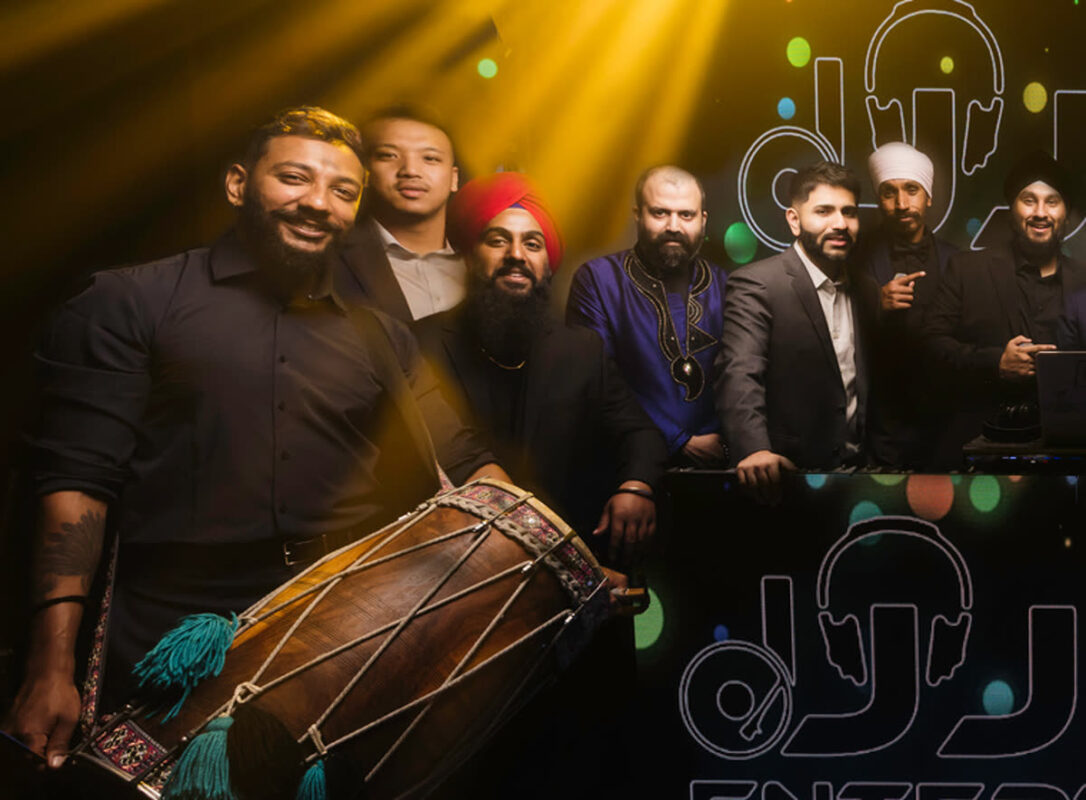
You have the date, the caterer, and a venue you love. Then someone asks the question nobody thought to ask on the tour: can we actually do the baraat here? For a lot of Dallas–Fort Worth couples, that is the moment a signed contract turns into a problem. A baraat is not a detail a venue accommodates automatically. It is an outdoor procession with amplified music, a dhol player, sometimes a horse, and eighty people dancing in a driveway — and every one of those pieces touches a rule somewhere.
This guide covers what a full baraat actually asks of a DFW wedding venue, how different venue types across Dallas, Plano, Frisco, and Irving tend to differ, and the exact questions to ask before you sign. We deliberately do not name specific properties with specific policies, because venue rules change with new management, new city ordinances, and new insurance carriers. What does not change is the checklist.
What a full baraat actually asks of a venue
Strip away the celebration for a second and look at it the way a venue operations manager does. A baraat needs:
- Outdoor amplified sound — a portable PA or battery system, usually loud, usually for 20 to 45 minutes
- Live percussion — a dhol player, sometimes two, which is louder than most venues expect
- A processional route — typically a driveway, motor court, or lawn path leading to the entrance
- A crowd standing and dancing outside — not seated, not contained, moving slowly toward the door
- Sometimes a horse — a live animal, with a handler, a trailer, and a liability question attached
- A clean handoff indoors — the milni and varmala follow immediately, so sound has to move inside without a dead gap
Any venue can host a reception. Not every venue can host that list. The gap between the two is where couples get surprised four weeks out.
The four constraints that decide whether your baraat happens
1. Noise ordinances and cutoff times
This is the one that catches people. Cities across DFW regulate outdoor amplified sound, and the limits vary by municipality and by zoning — a venue in a commercial corridor in Irving operates under different practical constraints than one backing onto a residential neighborhood in Plano or Southlake. Some venues also carry a private-event agreement with their own HOA or business park that is stricter than the city code.
What matters for you is not the decibel number in the ordinance. It is the venue answer to two questions: what time must outdoor amplified sound stop, and has anyone complained before? A venue that has hosted baraats without incident will answer both instantly. A venue that hedges is telling you something.
2. The horse question
A ghodi is the single most restricted element of a baraat in DFW. Venues that allow one usually require a certificate of insurance from the horse vendor naming the venue as additional insured, a designated staging and cleanup area, and a route that does not cross landscaping or certain paving. Some venues allow horses only on grass. Some allow them only in a specific side lot. Many do not allow them at all, and that is a flat policy rather than a negotiation.
Ask early. If the horse is non-negotiable for your family, it belongs in the venue search criteria, not in a follow-up email after the deposit clears.
3. Route, load-in, and timing overlap
The processional route has to work physically. Where does the baraat start — a parking lot, a side entrance, a hotel porte-cochere? Does it cross an active vehicle lane, and will the venue coordinate that? Is there another event on property that afternoon whose guests arrive through the same entrance?
Load-in matters just as much. A DJ team needs a path to bring a portable system and a dhol to the starting point, then break it down and be fully operational inside for the ceremony. On a tight timeline, a venue that requires equipment to travel a long service corridor changes what is possible.
4. Power at the start point
Most driveways and motor courts do not have accessible outdoor power. That is not a dealbreaker — battery-powered systems handle a baraat well — but it needs to be known in advance rather than discovered on the day. If a venue does have exterior power, confirm which circuit and whether the catering team is already loading it.
How DFW venue types tend to differ
These are tendencies, not guarantees. Verify with the specific property.
Hotel ballrooms are common for large South Asian weddings across Dallas, Irving, and Frisco, and many have real baraat experience. The porte-cochere gives you a natural, weather-protected processional route. The constraints are usually shared: other events, other guests, and a driveway that has to stay functional for arrivals.
Dedicated banquet and event halls that serve the South Asian community are often the easiest yes. They are built around this exact event flow, and staff will already know what a milni is. Ask anyway — experience varies more than reputation suggests.
Country clubs and golf venues have beautiful grounds and the most member-driven restrictions. Outdoor sound limits and cart-path routing rules are common, and membership complaints carry weight.
Outdoor estates, ranches, and barn venues in the areas around Fort Worth, McKinney, and Rockwall usually have the most physical room and the friendliest horse policies, and the most exposure to weather and to residential neighbors. Ask about the rain plan for the baraat specifically, not just for the ceremony.
Temples and community centers vary the most. Some have long-standing procession traditions, others have parking-lot constraints that make a full baraat impractical.
The questions to ask before you sign
- Have you hosted a baraat before? How many in the last year?
- Where does the procession start, and what is the route to the entrance?
- What is the cutoff time for outdoor amplified music?
- Do you allow a live dhol player outdoors? Any restrictions on volume or duration?
- Do you allow a horse? What insurance and staging requirements apply?
- Is exterior power available at the start point?
- Will another event be on property that day, and does it share the entrance?
- What is the rain plan for an outdoor procession?
- Do you require our DJ and dhol vendors to carry liability insurance, and at what limits?
- Is there a fee attached to any of the above?
Get the answers in writing, in the contract or in an emailed addendum. A verbal yes from a tour guide does not survive a staffing change.
How a good DJ team plans around a venue’s limits
Almost every constraint on that list has a workaround if it is known early. A hard outdoor sound cutoff means we compress the baraat and start on time rather than fighting it. No exterior power means a battery system and a tested runtime. A long load-in means an earlier arrival and a second setup point so the ceremony sound is live the moment the procession reaches the door. A venue that says no to a horse but yes to everything else can still deliver a baraat that feels enormous, because energy comes from the dhol, the crowd, and the transition into the room — not from the animal.
What does not work is finding out on the wedding day. This is the whole reason to ask during the venue search: the answers shape the timeline, and the timeline is what a DJ team builds the entire evening around.
Get the venue conversation right early
A baraat is usually the moment the families remember most, and it is the part of the day most dependent on a venue saying yes in advance. Ask the ten questions above on the tour. Put the answers in writing. Then bring your DJ and dhol team into the conversation before the timeline is locked, not after.
DJ Jazz Entertainment has run baraats at venues across Dallas–Fort Worth — hotel motor courts, banquet halls, and outdoor estates — and we are happy to look at a venue with you before you sign. If you already have a venue and want to know what is realistic there, that is a short conversation worth having.
