

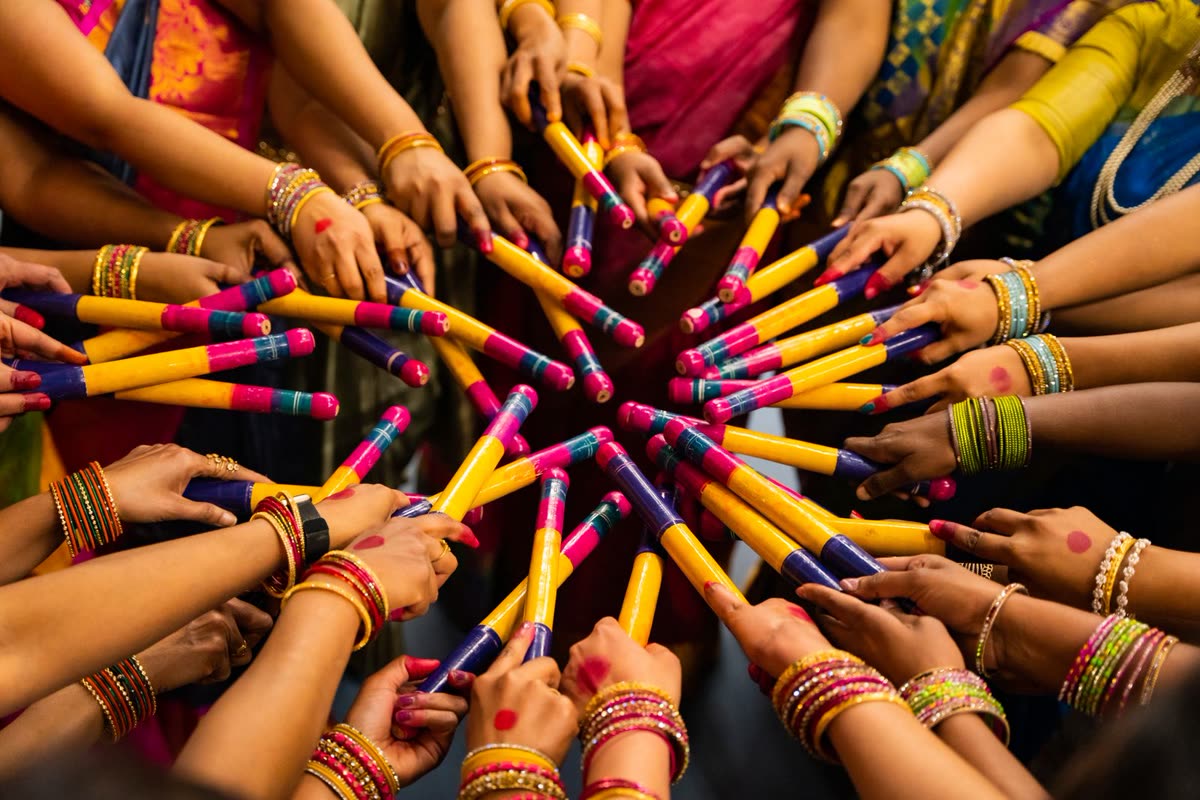
Every DFW regional association has a night like this. The Telugu association’s Ugadi program, the Gujarati samaj’s annual function, the Malayali association’s Onam celebration, the Punjabi cultural society’s Lohri night. The hall is full of families, the program runs to dozens of acts, half the performers are under twelve, and the cultural secretary is holding a printed running order that changed twice this week. Hiring an annual function DJ in Dallas for that night is a very different job from booking a DJ for a wedding or a party. The DJ is part of the program’s stage crew for three hours before becoming the party DJ for the last one.
This guide is for the committee members who have to organize it: the cultural secretary, the program chair and whoever ends up running the sound desk. It covers what to collect, when to collect it, and how the night actually runs.
Why an association annual function is its own kind of event
A wedding has one family making decisions. A corporate party has one planner. An association function has a committee, and on the night the DJ gets instructions from the president, the cultural secretary, three dance teachers and a parent whose child’s track is “the wrong version.” Unless one person has authority over the program, everyone gives the DJ orders.
The shape of the night is different too. Most of the evening is a stage show: classical dance, film-song group numbers, a kids’ fashion walk, a skit, a singer with a karaoke track, a chief guest’s address, sponsor recognition. Open dancing comes last, usually after dinner, and by then half the families with small children are packing up. The DJ’s real work is keeping the stage show running without gaps, and then opening a dance floor for the people who are still there.
If your function looks more like a banquet, with dinner, awards and a fundraising segment, our guide to running music around a gala program covers that format. This post is about the performance-heavy cultural night.
The cultural program is the main event, so treat the tracks like a production
More annual functions fall behind schedule because of track files than for any other reason. Thirty acts means thirty files, arriving from thirty different phones, some trimmed, some not, some a YouTube rip at poor quality, and at least one sent as a WhatsApp voice note. The fix is simple, and it has to be enforced by the committee, not the DJ.
A track-submission rule every performer gets in writing
- One deadline, at least a week before the event. Late tracks go to the bottom of the priority list.
- One file per act, already edited to the exact length the group rehearsed. A medley should be one continuous file, not four songs the DJ has to stitch live.
- A file name that matches the program: act number, group name, song. “07_Kids_Group_B_Bollywood_Medley” can be found in two seconds. “final final NEW.mp3” can’t.
- Start and end notes: does the group walk on in silence and strike a pose before the music starts, or does the music play them on? Does the track fade, or end hard on a pose?
- A contact for each act: one teacher or parent who can answer a question on the night.
Choreographed group numbers have the same needs as a family sangeet performance, just multiplied. Our piece on sangeet dance performance cues goes deeper into cue-sheet discipline, and all of it applies here.
The cue sheet the DJ actually works from
The committee’s printed program lists act names. The DJ needs more: act number, file name, who is on stage, how the act starts, how it ends, and whether there is an emcee announcement before it. Build this as one shared sheet a few days out, and treat any change after that as something the program chair has to approve. On the night, a changed running order that reaches the emcee but not the sound booth is how one group ends up dancing to another group’s music.
Stage, microphones and the tech run
A cultural program needs more microphones than people expect: the emcee or emcees, the chief guest at the podium, a singer or two, and sometimes a mic for a skit. Handheld mics get passed around and dropped. Headset or lavalier mics suit a skit better than handhelds. Decide the count with your DJ well in advance, and be honest about it. Asking for “one or two” and then needing five on the night is a common way for a program to fall apart.
Stage monitors matter for dancers. A group of children performing on a stage with all the speakers pointed at the audience often can’t hear their own music clearly, and they drift off the beat. Ask whether a monitor speaker facing the stage is part of the setup.
Ask for a tech run if the venue allows it. Even thirty minutes before doors open, with the emcee, the program chair and the DJ walking through the first ten cues, will catch the missing file, the mic that doesn’t reach the far side of the stage, and the act that needs a chair set out. Confirm load-in time and access directly with the hall. Community centers and school auditoriums each have their own rules, and those rules change.
Running the night: transitions, overruns and the emcee
The gap between acts is where a cultural program loses the audience. While one group walks off and the next group gets into position, the room starts talking, children start running around, and the energy drops. A good annual function DJ fills that gap on purpose: a short bridge of instrumental music at low volume under the emcee’s announcement, cut cleanly when the next group is in position.
Multilingual emceeing
Many association programs are emceed in two languages, the regional language and English, so second-generation kids and guests from outside the community can follow along. That doubles the length of every announcement. Build it into the timeline instead of discovering it at act twelve. If the DJ is also emceeing, agree ahead of time which parts are theirs and which belong to the committee’s own hosts.
When the program overruns
It will. The chief guest arrives late, a speech runs long, one group’s costume change takes twelve minutes. Decide before the night who has the authority to cut, and which acts can be shortened or moved. The DJ can compress transitions and stop waiting for applause to die down, but the DJ should not be the one deciding which children don’t get to perform.
When a track fails
Sooner or later a file will be corrupted or the wrong version. Carry a backup copy of every file on a second device, and agree on a plan for when something goes wrong: the emcee holds the stage, the DJ loads the backup, and the group restarts from the top rather than joining a song halfway through.
From stage show to dance floor
After the program and dinner, the room changes. The people still there came to dance, and they come from very different generations: uncles and aunties who want the classics from their home state, teenagers who want what’s current, and families who will dance to anything regional because it feels like home. The first few songs decide whether that floor fills.
- Open with the region’s own music. At a Telugu function that means Tollywood. At a Punjabi night it means bhangra and Punjabi pop. At a Gujarati function, garba rhythms fill a floor faster than almost anything. Mainstream Bollywood works everywhere, but it shouldn’t be the only thing that plays.
- Have the emcee open the floor out loud. An announcement that the dance floor is open, followed by a song the whole room knows, works far better than quietly turning the lights down and hoping people get up.
- Expect an early departure wave. Families with young children leave after the program. Plan the dance set for a smaller, older crowd than the one that watched the show.
Reading a mixed room like this is the same skill as at a wedding reception, and our guide to reading the dance floor explains how it works in practice. If your association’s biggest night is a festival rather than an anniversary function, see our guides to a community Diwali party and a Garba and Dandiya night.
Questions to ask before you book an annual function DJ in Dallas
- Have you run a performance-heavy cultural program before, not just a dance party?
- How do you want track files delivered, and what’s your cutoff?
- How many wireless microphones are included, and are stage monitors available?
- Will you work from our cue sheet and take direction from one named program contact?
- What’s your backup plan if a file fails or a piece of equipment goes down mid-program?
- Can you emcee, and in which languages? Or will you work alongside our own hosts?
- Who is the specific DJ on our night, and is that name in the contract?
That last question matters for any event. Our guide on what to ask a DJ before you sign covers the contract side in detail.
Planning your association’s annual function in DFW
An association night works when the committee treats it as a production: tracks collected on a deadline, one cue sheet, one person in charge of the program, and a DJ who understands that the stage show comes first. DJ Jazz Entertainment has more than 25 years of experience with South Asian events across Dallas–Fort Worth, including Plano, Frisco, Irving and the surrounding suburbs, with DJs, MCs, dhol, sound and lighting. If you’re organizing an annual function in Dallas for your community, get in touch to check availability for your date.
