

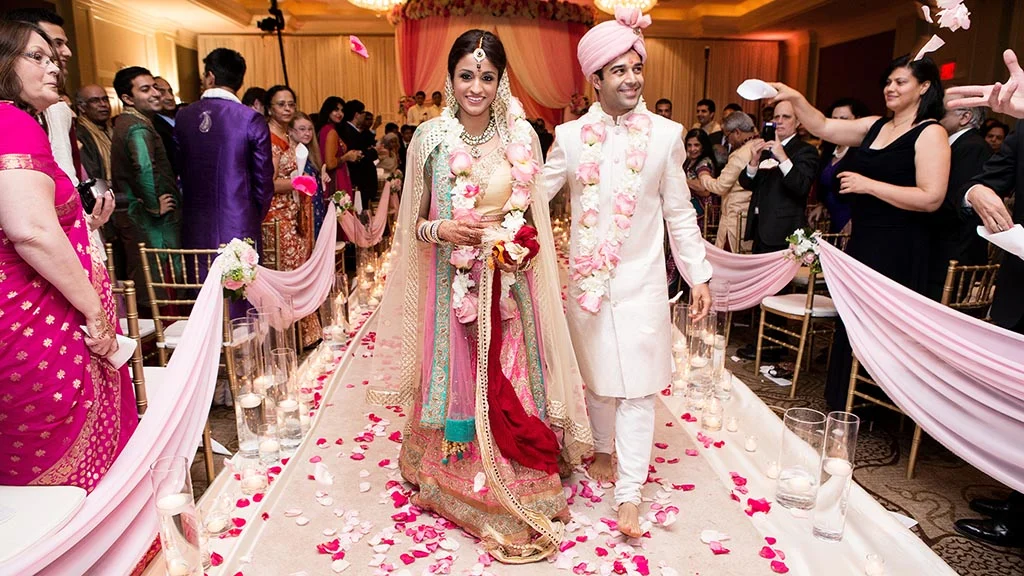
An engagement party in Dallas is usually the first event two South Asian families host together, and that changes what an engagement party DJ is actually there to do. Whether your family calls it a roka, a sagai, a mangni, a gol dhana or a ring ceremony, it is smaller than anything that comes later, it is more often held in a restaurant private room or at home than in a ballroom, and it runs on introductions, blessings and formality rather than on a packed dance floor.
That is why this event gets its own post. We have already covered what music works at the sangeet and mehendi and the overall wedding planning timeline. This one is about the event that comes before both: the first evening the families spend in the same room, with the same guests watching how they get along.
Why an Engagement Party Is Not a Smaller Sangeet
The most common mistake families make with an engagement party DJ in Dallas is treating it as a sangeet with a shorter guest list. It is a different kind of event, for three reasons.
- The guests do not know each other yet. At a sangeet, both sides have usually met. At a roka or sagai, many of the aunties, uncles and cousins in the room are meeting the other family for the first time. The evening’s real job is introductions.
- The elders set the tone. Grandparents and senior relatives from both sides are often the guests of honour in practice, even though the couple is the reason for the event. Volume, song choice and how loud the MC gets all have to work for them.
- Formality comes first, dancing second, if at all. A sangeet is built around performances and open dancing. An engagement is built around a ritual, a ring exchange, gift and shagun exchanges, and a meal. Some families want an hour of Bollywood and bhangra afterwards. Many want none, and a DJ who pushes a dance floor on a room that came to talk is working against the hosts.
Put simply: a sangeet DJ is running a show. An engagement party DJ is running a meeting that happens to have a soundtrack, and the best result is a room where both families leave feeling they were introduced properly.
Roka, Sagai, Mangni or Gol Dhana: Know Which Event You Are Hosting
These words overlap, and families use them differently, so settle the name and the structure before you brief anyone. Broadly:
- Roka is common in Punjabi and North Indian families. It marks the two families formally agreeing to the match, and is often small, sometimes just close family at a home, with blessings, gifts and sweets. Some families hold it weeks or months before a larger engagement; others combine the two.
- Sagai or mangni usually means the ring ceremony, and tends to be the bigger of the two, with extended family and friends invited. Pakistani families often use mangni for this event too.
- Gol dhana is the Gujarati engagement tradition, named for the jaggery and coriander seeds distributed at it.
- Nichayathartham is the Tamil engagement ceremony, which we touched on in our post on what makes a South Indian wedding different. Telugu families hold their own formal engagement as well.
Naming and order vary by region and by family, and the priest or the elders decide what is actually performed, not any vendor. What matters for your planning is simpler: does the evening have a ritual half, and if so, how long is it and who leads it? If a pandit or elder is performing a short puja, a tilak or chunni ceremony, or a formal blessing, the DJ’s job during that time is almost entirely to stay silent and keep a microphone working. If the event is a ring exchange and dinner with no religious ritual, the running order is simpler, but it is still announcement-led.
If the two families come from different traditions, ask each one what they expect before the day. It is common in DFW for a Punjabi family to be marrying into a Gujarati, Telugu or Bengali family, and each side may assume its own customs are the default. The engagement is the first place that shows up in public, so it is worth a phone call beforehand rather than a surprise at the mic.
The Two-Families Problem, and Who the Engagement Party DJ Takes Direction From
At a wedding reception there is usually one planner or one family member running the night. At an engagement party, both families feel ownership, one of them is the host, and nobody wants to be the person who overrules the other side in front of guests.
Solve that before the event, not during it:
- Name one night-of contact. One person, usually from the hosting family, makes the calls on timing and volume on the day. The other family should know who that is.
- Get a written introductions list from both sides. If the MC is introducing parents, grandparents and siblings, they need each name spelled phonetically, in the order each family wants them announced, and with the relationship stated (the groom’s maternal grandmother, the bride’s elder brother). Getting a name wrong at the first joint event is remembered.
- Agree on language. If one set of grandparents is more comfortable in Hindi, Punjabi, Gujarati, Telugu or Urdu, a line or two of welcome in that language lands better than a polished English script.
- Ask about music restrictions from both sides. Some families are comfortable with any music; others want only devotional music or none during the ritual, or prefer no explicit lyrics at all in front of elders. As with a Nikah, ask, do not assume. A DJ who arrives with a default set gets it wrong in one direction or the other.
An Announcement-Led Running Order
An engagement party usually runs three to four hours, shorter than a reception, and more of that time is structured. A typical running order looks like this, and your family will adjust it:
1. Arrivals and greetings
Low, warm background music while both families arrive and meet. This is the most important volume decision of the night: guests need to be able to hear each other’s names on the first introduction. Instrumental and older, familiar film songs work well here.
2. Welcome and introductions
The MC welcomes everyone, thanks both families, and introduces the key relatives from each side using the list above. Keep it brief and warm. This is where the evening’s tone is set.
3. The ritual, if there is one
Music off. The priest or elder leads, the DJ keeps a microphone live if the family wants the room to hear, and nothing is played until the hosts say the ritual is finished.
4. The ring exchange
This is the one moment the whole evening builds towards, and the photographers and videographers will want it lit and cued. Pick one song, have it edited to start at the part you want, and agree on who signals the start. The MC calls the room’s attention, the couple exchanges rings, and the song comes up as the rings go on, not after.
5. Shagun, gift and sweet exchanges
Families exchanging gifts, clothes, sweets and blessings can take far longer than planned, often 30 minutes or more with a large family. Schedule it rather than letting it sprawl across dinner, and keep the music under it low so relatives can speak to each other.
6. Toasts and short speeches
A parent from each side, perhaps a sibling or a friend. Cap the list and name someone who can close the block politely. Our reception timeline post covers how to keep a speech block from swallowing the evening, and the same rules apply here at a smaller scale.
7. Dinner, then an optional dance set
Dinner music stays at conversation level. If the families want dancing, a short set of 30 to 60 minutes after dinner is usually right. Open with songs that both the elders and the cousins know, and let the energy build only if the room comes with it.
Why the Engagement Playlist Is Different
An engagement party playlist is not a sangeet playlist with the volume turned down. A few things change:
- Music is part of the introduction. If one family is Punjabi and the other Gujarati or Telugu, playing music from both regions during dinner quietly tells both sides they are welcome. A Hindi-only playlist can make half the room feel like guests at someone else’s event.
- Lyrics matter more than usual. Elders from the other family are listening closely. Heartbreak songs, suggestive lyrics and anything with an explicit edit do not belong in the background of a first family meeting.
- The ring exchange song should be chosen by the couple and cleared with the parents. It is the one track that will appear in the video for years.
- Performances, if any, are small. A cousin’s short dance or a family song works well. Treat any performance audio the way you would at a sangeet: one edited file per act, sent days ahead, as covered in our sangeet performance cues guide.
DFW Engagement Party Venues: Restaurants, Homes and Halls
Most engagement parties in Dallas–Fort Worth happen in one of four places, and each creates its own problems for an engagement party DJ:
- Restaurant private rooms in Plano, Frisco, Irving and Richardson are popular for a sagai. The questions are whether the room shares a wall with the main dining room, whether the restaurant’s own background music can be switched off in your room, how much power is available, and whether there is space for a speaker and a small booth at all.
- Homes are common for a roka. Household circuits, neighbours, HOA rules and where the music can go without blocking the entrance or the puja area all need thinking through in advance. A small system placed well does more than a large one crammed into a living room.
- Banquet halls make sense for a large sagai with 150 or more guests, and they bring the usual questions about load-in times, house sound and when amplified music has to end.
- Temple or community halls may have their own rules about music, food and end times.
Every venue sets its own rules, and those rules change. Confirm load-in, power, sound limits and the music end time with your venue directly and in writing, not from a vendor’s general advice, including ours.
Questions to Ask Your Engagement Party DJ
- Have you worked roka, sagai or gol dhana events before, and how did the running order differ from a sangeet?
- Can you MC the introductions, and will you work from a phonetic list from both families?
- What size system do you bring for a restaurant room or a home, and how much power does it need?
- How will you handle a ritual that runs long, or a gift exchange that overruns dinner?
- Can you play music from both families’ regions and languages, not only Bollywood?
- Who exactly will be at our event, and is that person named in the contract?
For the contract side of that conversation, including backup equipment and cancellation terms, see what to ask a Dallas wedding DJ before you sign. The same questions apply to the engagement, and many families book the engagement party DJ as a first look at the vendor they may use for the wedding.
Planning Your Engagement Party in Dallas
An engagement party is small, but it is the first impression two families make on each other, and the music, announcements and running order shape that impression more than most hosts expect. Choose an engagement party DJ in Dallas who treats it as a formal family event first and a party second: someone who keeps the volume low enough for introductions, stays silent during the ritual, gets every name right, and only builds a dance floor if the room wants one.
DJ Jazz Entertainment has spent more than 25 years providing DJs, MCs, dhol players, sound and lighting for South Asian weddings, cultural celebrations, corporate events and private parties across Dallas–Fort Worth, including Plano, Frisco, Irving and the surrounding suburbs. If you are planning a roka, sagai or engagement party, get in touch to check our availability and talk through your running order.
