

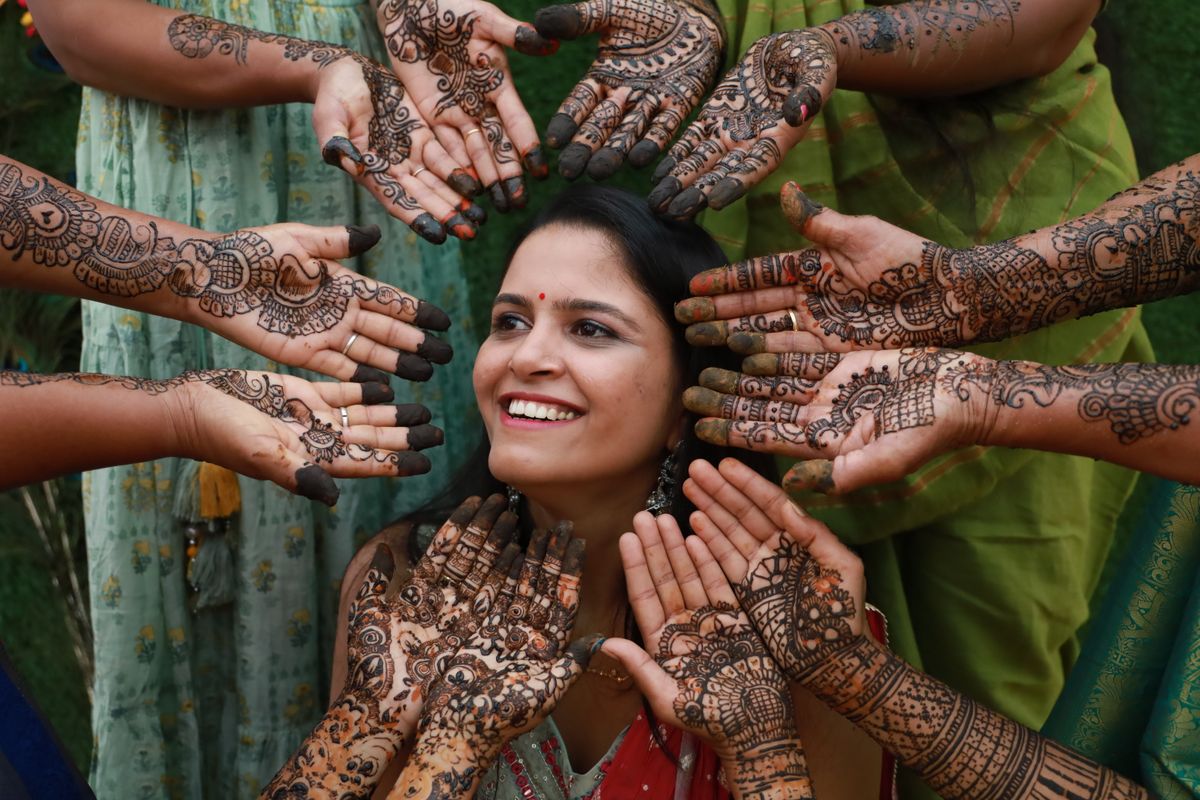
More families across Dallas–Fort Worth are bringing the haldi and mehendi at home: a tent in the backyard of a house in Plano, Frisco or Irving, a few dozen relatives, and an afternoon that runs four or five hours. It is the warmest part of the whole wedding week. It is also the part where the sound is most often an afterthought, and a Bluetooth speaker on a patio table is asked to do a job it was never built for. This guide covers the logistics of sound for a daytime backyard haldi and mehendi in DFW. The songs themselves have their own guide: our sangeet and mehendi playlist planning post covers what to play. This one covers where it comes from, how loud, and who holds the mic.
Why a Haldi and Mehendi at Home Is a Different Sound Job
A reception is a room built for music. A backyard is not. There are no walls to hold the sound, so it spreads toward the neighbours instead of toward your guests. The crowd is also doing something other than dancing for most of the day: aunties are seated with the mehendi artist, cousins are waiting their turn, and elders want to talk. Music for a mehendi is background for three hours and a dance floor for thirty minutes. Haldi is the opposite: short, loud, messy and over quickly.
That split is the whole brief. A good setup has to sit quietly under conversation, then lift for the dholki songs, the haldi entrance and the dancing at the end, without anyone carrying speakers around mid-afternoon.
Speaker Placement for a Backyard Mehendi
Most backyard problems come from putting one loud speaker in a corner. Guests nearest to it cannot hear each other, guests at the far end hear nothing, and the sound carries straight over the fence. Two smaller speakers at lower volume, aimed inward toward the seating and away from the property line, nearly always beat one big box turned up.
- Aim into the yard, not out of it. Point speakers toward the house or the tent, so the house wall stops the sound rather than the neighbour’s window.
- Keep the mehendi artist’s area quieter. The bride sits still for hours. Put her near the music, not on top of it.
- Leave a clear patch for dancing. Even a small square of patio or lawn near the speakers turns into the dance floor when the dholki songs start.
- Read your own HOA rules and city guidance on noise rather than relying on any vendor’s summary, including ours, and tell your neighbours the date ahead of time.
Power, Heat and Shade: The Daytime Problems
An evening reception happens inside a venue with outlets on every wall. A daytime haldi happens on grass, often under Texas sun. Three things go wrong most often.
Power runs
Find out where the outdoor outlets are, and whether they share a circuit with anything heavy such as a coffee urn, a chai station, warming trays or fans. A tripped breaker in the middle of the bride’s entrance is the classic backyard failure. Tell your DJ how far the nearest outlet is from where you want the music, so they bring cable runs and covers that keep cords out of the walking path.
Heat and direct sun
Speakers, mixers and laptops do not like hours in direct afternoon sun, and neither do the people running them. Ask for the equipment to sit under the tent or in shade. If the event is outdoors in the warmer months, the same backup thinking in our rain and heat plan for an outdoor mandap applies here: know where everything moves if the weather turns.
Haldi is messy
Turmeric paste stains everything it touches, including speaker grilles and microphone foam. Agree in advance where the haldi actually happens, keep the sound gear a few feet back from it, and have a towel ready for whoever is holding the mic.
Microphones: Who Talks, and When
A home haldi and mehendi has more spoken moments than people expect: a welcome from the parents, blessings from grandparents, a few words before the haldi, family games and, at many Punjabi and North Indian events, aunties singing traditional geet with a dholki. One wireless handheld mic covers most of it. If live singing is part of your plan, tell your DJ in advance so the singers and the dholki can be heard without shouting. The mic thinking is similar to the ceremony advice in our wedding ceremony audio guide: decide who speaks, in what order, and make sure the person holding the mic knows how close to hold it.
A Simple Running Order for the Afternoon
Every family runs these differently, but a backyard haldi and mehendi usually moves through four phases, and the sound should change with each one.
- Arrival and mehendi application. Soft, familiar music at conversation volume. This is the longest stretch.
- Haldi. The bride or groom is brought in, paste is applied, family gathers close. Music lifts, and this is where a live dhol player can make the entrance if you have booked one.
- Geet, games and speeches. Music drops back, the mic comes out.
- Dancing to close. Volume and energy come up for the last stretch, then wind down before guests leave.
If your haldi and mehendi are on separate days, or combined with a puja, plan each one on its own. A puja at home has its own sound needs, which we cover in our Griha Pravesh and housewarming post.
Questions to Ask Your DJ for a Haldi or Mehendi at Home
- Will you visit or look at photos of the backyard before the day?
- How many speakers do you recommend, and where would you put them?
- How much cable do you bring, and how do you keep cords out of walking paths?
- Can the equipment sit in shade, and what is the plan if it rains?
- Do you bring a wireless mic, and can you support live singing with a dholki?
- How do you handle volume for the neighbours and keep it low through the mehendi?
- Can you coordinate with a dhol player for the haldi entrance?
The full list of questions for the wedding as a whole is in our South Asian wedding planning timeline.
Planning Your Haldi and Mehendi at Home in DFW
A haldi and mehendi at home is meant to feel easy and close to family. Good sound planning keeps it that way: quiet enough for the aunties to talk, loud enough for the haldi entrance, and never the reason a neighbour comes to the fence. DJ Jazz Entertainment provides DJs, MCs, dhol, sound and lighting for Indian weddings and pre-wedding events across Dallas, Plano, Frisco, Irving and the rest of DFW. If you are planning a backyard haldi or mehendi, tell us about your date and your space and we will help you work out what you actually need.
